
Frozen & Burst Pipes Before Winter
A January cold snap finds every pipe that runs along an outside wall or through an unheated basement. Most burst pipes and ice dams in Cambridge can be prevented with an afternoon’s work in the fall.
Why Pipes Freeze in Triple-Deckers
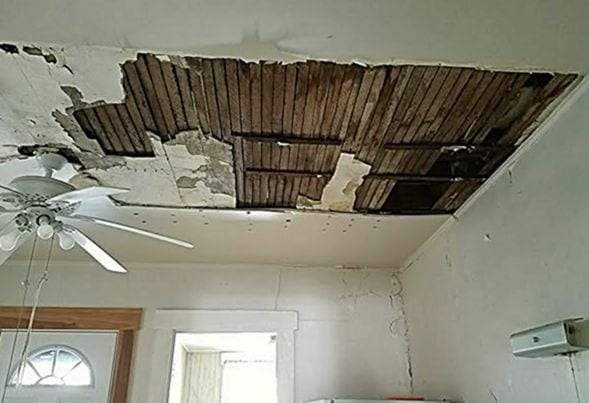
Cambridge's triple-deckers and older two-families were built with little or no insulation, and their plumbing was often added to over the years: kitchens and baths moved to the back of the house, pipes run along outside walls, through unheated stairwells and back porches, or past drafty rim joists in the basement. A heated apartment can sit right next to a pipe that is close to outdoor temperature.
When water freezes in a pipe, the ice itself rarely splits it. The ice pushes the water ahead of it toward a closed faucet, the pressure builds, and the pipe bursts where it is weakest, often a few feet from the ice. Nothing leaks until it thaws, so the flood usually starts on the first warm afternoon, sometimes while nobody is home.
Pipes in unheated spaces are most at risk once the outside temperature drops to about 20°F, and the risk climbs with wind, with a run of cold nights and with the heat turned down.
Is Your Pipe at Risk Tonight?
Use the checker on any evening when the forecast drops below freezing, and especially before the first deep cold of the season or before you leave the house for a few days.
Freeze Risk Checker
Pick the pipe you are worried about and tonight's forecast low. The checker gives a rough risk level and what to do before you go to bed. It cannot see inside your walls, so treat it as a reminder, not a guarantee.
Your result will appear here.
Symptom, Likely Cause, Fix
Burst pipes, ice dams and attic leaks can look alike from inside. This is how to tell them apart:
| Symptom | Likely Cause | Fix |
|---|---|---|
| No water, or only a trickle, from one faucet on a very cold morning | A frozen section in an outside wall, under a sink or in the basement | Open the faucet, then warm the pipe gently with a hair dryer or a space heater (never an open flame). Call if you cannot find the frozen spot |
| Water spraying, a hissing sound, or the water meter turning with every tap closed | A burst pipe | Shut off the main now. Call us to extract and dry, and a plumber to repair the pipe |
| A brown stain on a top-floor ceiling or wall during a thaw | An ice dam at the eaves backing meltwater up under the shingles | Clear the lower roof with a roof rake from the ground; dry the ceiling and insulation; long term, air sealing and attic insulation |
| Heavy icicles along the gutters and water running inside an outside wall | An ice dam over the wall, with water getting behind the siding | Have a roofer remove the ice with steam, not hammers or salt; we open, dry and repair the wall |
| Frost or drips on the underside of the roof boards in the attic | Warm, damp air leaking into the attic and condensing, often from a bath fan that vents into the attic | Vent fans to the outside, air-seal the attic floor, dry or replace the wet insulation |
| A stain that grows a little after every cold snap | A pipe that freezes and weeps at the same joint each time | Open the ceiling or wall, dry it, and insulate, heat-trace or reroute the pipe |
Before Winter Prevention Checklist
Do these in October or November, before the first hard freeze:
- Find the main water shut-off and make sure it turns. In a triple-decker, everyone in the building should know where it is.
- Shut off outdoor faucets from the inside valve, open them outside to drain, and take the hoses off.
- Fit foam sleeves on pipes in the basement, crawl space and along outside walls, and seal the drafts around the rim joist.
- Keep the heat at 55°F or higher when you are away, including vacant units and common stairwells.
- On the coldest nights, open the cabinet doors under sinks on outside walls and let those faucets drip.
- Clean gutters and downspouts once the leaves are down, so meltwater can drain.
- Buy a roof rake and clear the bottom few feet of the roof after a heavy snow, from the ground.
- Have the attic insulation and air sealing checked; Mass Save offers home energy assessments.
- Put a water leak alarm by the water heater, the washer and any pipe that has frozen before.
- If you travel, arrange for someone to check the house every day.
Landlords: the stairwells, the basement and any vacant unit are the places that freeze first, because nobody is living there to notice.
Winter Pipe Questions
What is an ice dam, and why does it leak?
Heat escaping through the attic warms the roof and melts the snow on it. The meltwater runs down to the cold eaves, overhanging the walls, and freezes again into a ridge of ice. More meltwater pools behind that ridge and works its way up under the shingles, into the wall and through the ceiling. Raking the snow off the lower roof stops it for now; air sealing and insulating the attic stops it for good.
Is foam pipe insulation enough?
For pipes in heated rooms or near a warm basement, usually. Foam slows heat loss but adds no heat, so a pipe in an unheated space can still freeze on a long, cold night. For a pipe that has frozen before, add a heat cable listed for pipe use and installed to its instructions, close off the drafts around it, or have the pipe rerouted inside the heated part of the house.
Does insurance cover a burst pipe?
Usually, yes: a pipe that bursts suddenly is the textbook sudden and accidental loss. Policies often expect reasonable care, such as keeping the heat on or draining the plumbing in a vacant house, so a burst pipe in an unheated, empty unit can be a harder claim. Damage from a slow leak that went on for months usually is not covered. Interior damage from ice dams often is. We work directly with insurance companies and document the source and the damage for your adjuster.
What should I do the moment a pipe bursts?
Shut off the main water valve. If water is near outlets, light fixtures or the panel, keep clear and turn the power off only from a dry spot. Open a faucet on the lowest floor to drain the lines, move what you can out of the way, take photos, and call (857) 754-6108. Emergency calls are answered around the clock.
If water has already done damage, see how we handle water damage restoration, or call (857) 754-6108.