
Our Process: From the First Call to the Final Check
Restoration goes best in a set order: understand the damage, agree on a plan, do the work, and prove it is finished. Here is what each step involves and what we will ask of you.
Process Steps & What to Expect
Spencer Burton built the company around one habit: inspect first, then plan. Guessing at the scope once work has started is how jobs run long and estimates change. The table shows each step, roughly how long it takes and what your part is.
| Step | What Happens | How Long | Your Role |
|---|---|---|---|
| 1. First call | We ask what happened, where and since when, and tell you what to shut off and what to leave alone. Emergency calls are answered around the clock. | One phone call | Describe what you see; stop the water if it is safe to |
| 2. Assessment | A thorough inspection before any work: moisture readings, where the water or smoke went, photos of everything, including the floor or unit below. | One visit, before work starts | Give us access to every affected area, including neighbors’ units |
| 3. Estimate and plan | A clear plan and timeline in plain words and a written estimate. Spencer sends the estimate and paperwork to your insurance company himself. | Before the main work begins | Share your policy and claim details; approve the plan |
| 4. The work | Extraction, drying with air movers and dehumidifiers, removal of what cannot be saved, cleaning and odor removal, then the repairs. | Drying usually takes several days; repairs depend on the scope | Keep the equipment running; tell us if anything changes |
| 5. Testing and walkthrough | Final moisture readings against dry, unaffected materials, a check that the work meets code, and a walk through every room with you. | A final visit | Walk through with us and ask about anything you want explained |
What the Assessment Looks For
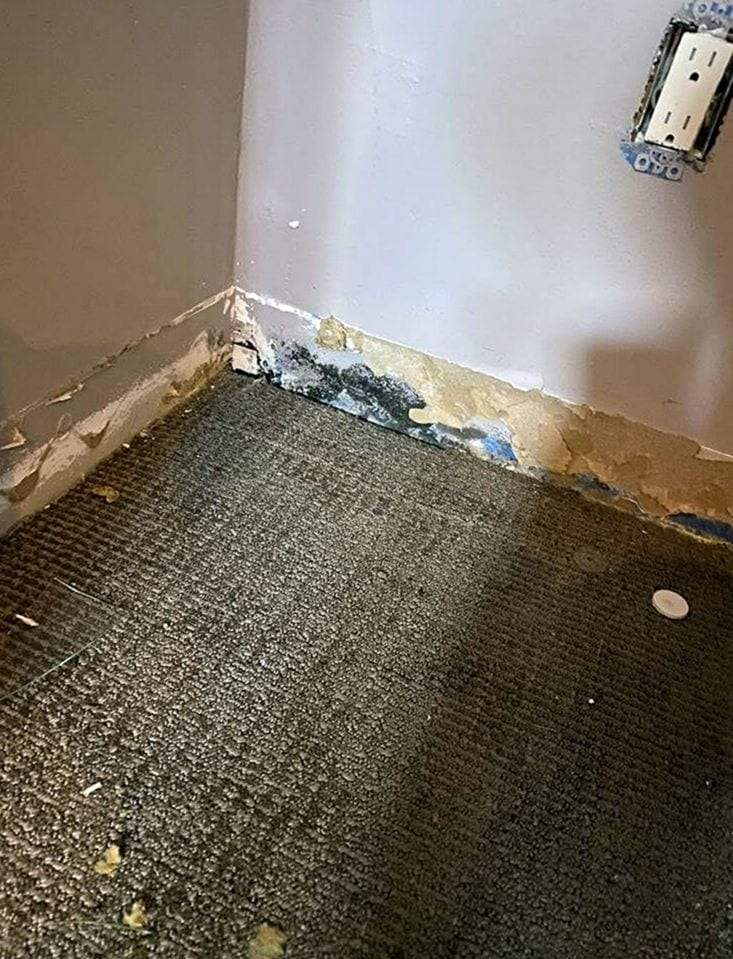
Water and smoke go farther than they appear to. The assessment follows them: moisture readings across floors, walls and ceilings, beyond the obvious wet spots and into the rooms and units next door; a look behind baseboards and under carpet edges; and the attic or the basement when the source is above or below.
We also note what can be saved. Plaster, hardwood and solid trim can often be dried or cleaned in place, which costs less and keeps the character of an older house. What cannot be saved, such as soaked carpet pad or drywall wet with dirty water, is listed so that you, and your insurance company, know why it is coming out.
You get the findings in plain words with a clear plan and a timeline, before the main work starts.
Documents to Have Ready for Your Estimate
You do not need all of these on day one, but the more you have, the smoother the estimate and the claim go:
- Your insurance company, your policy number and, if you have opened one, the claim number
- The adjuster’s name, phone and email, if one has been assigned
- Photos and videos of the damage taken before any cleanup
- When you found the damage and what you did about it
- A report naming the cause, if you have one: the plumber’s invoice for the burst pipe, the fire department report
- A list of damaged belongings, with receipts or rough ages where you have them
- Receipts for emergency costs: pumps, tarps, hotel nights, meals
- Contacts for the landlord, condo association or property manager, and for the owners of the units above or below
- Your mortgage company’s name: insurance checks for larger claims are often made out to you and your lender together
How We Keep You Informed
Spencer manages the scheduling, the estimates and the insurance paperwork himself, so you have one person to ask instead of a string of departments. The crew is small and experienced, and we do not hand jobs to subcontractors.
You will know who is coming and when, what the readings show, and what comes next. If something changes, such as wet framing found behind a wall or a repair needing a permit, we tell you before it changes the plan. Questions at any point: (857) 754-6108.
Process Questions
How does insurance billing work?
We work directly with your insurance company. We send them the estimate, photos and moisture readings and answer the adjuster's questions, so you are not stuck relaying messages. You are responsible for your deductible and for anything the policy does not cover, and if part of the work falls outside the claim, we tell you before we do it, not after.
Why is the equipment left running day and night?
Drying depends on steady airflow and dry air. Every hour the air movers and dehumidifiers are off, the walls and floors stop giving up water, and drying takes longer. Please leave them running and do not move them; they are placed to push air across specific wet areas. They draw ordinary household power, so we spread them across circuits. We check the readings at each visit and remove equipment as each area dries.
What happens at the final walkthrough?
We go room by room with you: what was removed and replaced, the final moisture readings and how they compare with the dry materials elsewhere in the house, and anything still to be done by another trade, such as a plumber's repair. Spencer is usually on site for the bigger jobs, and nothing is called finished until the readings say it is dry and the work meets code.
Do I need to be home while you work?
For the first assessment and the final walkthrough, yes, or someone who can speak for you. In between, you can leave a key or a lockbox code so the crew can come and go to check the equipment. We will tell you who is coming and when.