
Storm & Wind Damage Restoration in Cambridge
Nor’easters, summer thunderstorms and the occasional hurricane remnant bring down limbs, lift shingles and drive rain into walls. We secure the house first, then dry it out and repair the inside.
What Storms Do to Cambridge Houses
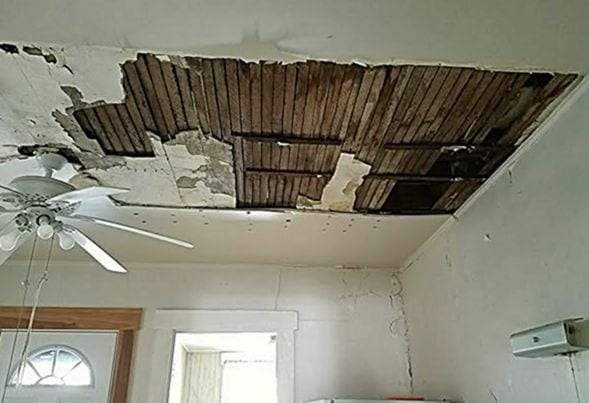
Cambridge streets are lined with big, old trees, and the houses under them are close together. In a nor’easter or a summer thunderstorm a single limb can take out a porch roof, a gutter and a window at once. Wind lifts shingles and flashing, and rain driven sideways gets in around window frames and through clapboards that would shed ordinary rain without trouble.
The damage you see from the street is only part of it. Water that gets into an attic soaks the insulation and then the plaster ceiling below, which can hold for days and then let go. Downpours overload the storm drains and, where sewers are combined, push water up into basements. When the power goes out, sump pumps stop.
Storm Damage Severity & Response
A quick way to judge how urgent your damage is, from a missing shingle to a tree in the living room:
| Damage Level | Signs | Immediate Risk | Repair Priority |
|---|---|---|---|
| Minor | A few missing or lifted shingles, small branches and debris on the roof, a loose gutter | Slow leaks that may not show inside for weeks | Inspect within a few days and repair before the next storm |
| Moderate | Lifted flashing, a broken window, a drip or a new stain on a top-floor ceiling | Water inside walls, ceilings and insulation; mold within days | Tarp or board up the same day and start drying |
| Serious | A large limb on the roof, a hole through the roof boards, a damaged porch roof or chimney | Rain pouring in, falling debris, weakened framing | Emergency: keep people out of the area, tarp, extract water |
| Severe | A tree through the roof or a wall, a ceiling down, power lines on or near the house | Injury, electrocution, structural collapse | Call 911 and Eversource first; we secure and dry the house once it is safe |
How We Respond
- Make it safe. We look at the hazards first: wires, hanging limbs, sagging ceilings, wet electrical.
- Stop the water. Tarps on damaged roofs, plywood over broken windows and doors.
- Remove water and dry. Extraction, wet insulation out, air movers and dehumidifiers in, readings until it is dry.
- Document it. Photos and moisture readings for your insurance company, which we work with directly.
- Repair the inside. Ceilings, walls, insulation, trim and floors, back to the way they were.
Emergency calls are answered around the clock, storm nights included. Call (857) 754-6108.
Storm Damage Walkthrough
Once the storm has passed and it is safe to go outside, walk the house in this order:
- Look at the roof line from the ground: missing shingles, lifted flashing, a leaning chimney, gutters pulled away.
- Stay well clear of downed wires and anything they touch, and report them to Eversource and 911.
- Check the attic with a flashlight for wet insulation, drips and daylight where there should not be any.
- Look at top-floor ceilings and around windows for new stains, bubbling paint or wet sills.
- Walk the basement: water on the floor, a sump pump that did not run, a floor drain that backed up.
- Check porches, decks, fences and the outdoor air conditioning unit for limb damage.
- Look up at the trees: limbs hanging over the house and trees that now lean are the next storm’s damage.
- Photograph everything before cleanup; your phone records the date and time.
- Keep receipts for tarps, pumps, hotel nights and anything else you buy because of the storm.
Storm Damage Questions
Do you do emergency tarping and board-up?
Yes. Temporary protection comes first: a tarp over the damaged roof, plywood over a broken window or door, so the rain stops getting in while repairs are planned. Most policies expect you to take reasonable steps to prevent further damage after a storm, and the cost of that emergency protection is normally part of the claim.
Will you work with my insurance adjuster?
Yes. We work directly with insurance companies, and Spencer handles the estimates and the paperwork himself. We can walk the damage with your adjuster and share our photos and moisture readings, so the hidden damage inside ceilings and walls is not missed.
A tree fell on my house. Who do I call first?
If anyone is hurt or wires are down, call 911, and report the wires to Eversource. Stay out of the rooms under the tree. Taking a tree off a roof is a job for a tree crew with the right rigging; if it came from a city street tree, let Cambridge DPW know. Call us as early as you like: once the weight is off, the roof needs to be tarped and the inside dried before the next rain.
My basement flooded during the storm. Is that storm damage?
It depends on where the water came from, and so does the insurance answer. Rain through a damaged roof is storm damage. Water that rose through the foundation counts as flooding, which needs flood insurance. Sewage pushed up the floor drain is a sewer backup, which usually needs a separate endorsement. Our flooded basement page explains how to tell them apart.